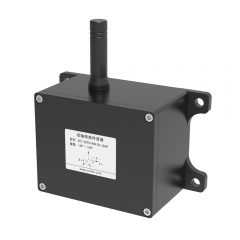
Summary: The China Academy of Railway Sciences engaged ZC Sensor to monitor sleeper tilt inside a 4 km railway tunnel in Qinghai Province at an altitude exceeding 3,000 meters. The tunnel contains two tracks (up and down) and had no cellular signal, strict data confidentiality requirements, and strong radio interference when trains passed. ZC Sensor deployed the ZCT330M-SWP-L-CN470 LoRaWAN tiltmeter with an adjustable alarm delay (0.3–25.5 s) to suppress interference and avoid false alarms, using an on-premises LoRaWAN gateway and server architecture that keeps all data inside China Railway’s intranet.

1. Project Overview
China operates the world’s largest high-speed rail network — over 22,000 km of operating mileage, more than 60% of the global total. Railway safety is managed through a whole-lifecycle assurance system that includes design review, supervision, acceptance testing, and ongoing operational inspection.
In 2020, the China Academy of Railway Sciences, a subsidiary of China Railway Corporation, contacted ZC Sensor with a specialized monitoring requirement: a 4 km railway tunnel in Qinghai Province, at an altitude of over 3,000 meters. The tunnel contains a chamber with two railway tracks — one for upward and one for downward traffic. The task was to monitor sleeper tilt remotely and automatically, with alarm messages sent to tunnel operators as soon as tilt exceeded preset thresholds.
Key project data:
- Customer: China Academy of Railway Sciences (China Railway Corporation)
- Location: Qinghai Province, China — 4 km tunnel at 3,000+ m altitude
- Application: Railway sleeper tilt monitoring (remote, automatic)
- Sensor: ZCT330M-SWP-L-CN470 LoRaWAN dual-axis tiltmeter
- Measurement range: ±30°
- Accuracy: ±0.005°
- Alarm: Pre-set threshold with 0.3–25.5 s adjustable delay
- Project year: 2020
2. The Challenge: Three Constraints That Ruled Out Cellular
The tunnel environment imposed three fundamental constraints on the monitoring solution:
- No cellular signal: Inside the tunnel, there is no telecom coverage for wireless communication. Any solution depending on public cellular networks (4G, NB-IoT) was not viable.
- Data confidentiality: The monitoring data is classified as confidential, and access to external systems is not permitted. Data could not be routed through any third-party cloud platform.
- Radio interference: Signal reflection inside the tunnel, plus strong electromagnetic interference when trains pass through, would disturb wireless communications and sensor readings.
These constraints shaped the architecture: a local wireless network (LoRaWAN) with an on-premises gateway and server, keeping all data within the railway’s intranet.
3. The Solution: On-Premises LoRaWAN Architecture
System Architecture
ZC Sensor supplied the ZCT330M-SWP-L-CN470 dual-axis tiltmeter, which uses the standard LoRaWAN wireless communication protocol (CN470 band, the LoRaWAN standard for China). The system was deployed as follows:
- Tiltmeters mounted on railway sleepers monitor tilt continuously
- Data uploaded via LoRaWAN to a local gateway inside the tunnel
- Gateway connected by cable to a local server
- ZC network server (NS) and application server (AS) installed on the customer’s own server, transplanted from ZC’s platform
- Server connected to China Railway’s intranet — tunnel operators log in from the office to access real-time data
This architecture satisfies all three constraints: no reliance on public cellular networks, no data leaving the railway intranet, and a wired gateway link that is immune to the tunnel’s radio reflection and train-passage interference.
Interference Suppression and False-Alarm Avoidance
A key engineering challenge was preventing false alarms. The tiltmeter’s alarm threshold can be pre-set and reset, and the alarm delay is adjustable from 0.3 seconds to 25.5 seconds. This delay window allows the system to distinguish genuine, sustained tilt from transient interference caused by passing trains — a passing train creates momentary signal disturbance that a short-delay alarm would otherwise misinterpret.
4. Technical Specifications
| Parameter | Specification |
| Product model | ZCT330M-SWP-L-CN470 |
| Measurement type | Dual-axis tiltmeter |
| Measurement range | ±30° |
| Accuracy | ±0.005° |
| Communication | Standard LoRaWAN protocol (CN470 band) |
| Alarm threshold | Pre-set and remotely resettable |
| Alarm delay | Adjustable 0.3 s to 25.5 s (interference shielding) |
| Gateway | Local LoRaWAN gateway |
| Data platform | ZC network server (NS) + application server (AS) |
| Data flow | Tunnel intranet only — no external cloud access |
| Application focus | Railway sleeper and track monitoring |
5. Results & Impact
Remote automatic monitoring: Sleeper tilt is now monitored continuously and automatically, replacing manual inspection schedules and providing real-time visibility to tunnel operators.
Immediate alarm response: When tilt exceeds the pre-set threshold, alarm messages reach tunnel operators immediately, enabling timely investigation and maintenance before conditions worsen.
False-alarm suppression: The adjustable alarm delay (0.3–25.5 s) effectively shields transient interference from passing trains, avoiding nuisance alarms while still catching genuine sustained tilt.
Data confidentiality: The on-premises server architecture keeps all monitoring data within China Railway’s intranet, satisfying strict security requirements.
No cellular dependency: The LoRaWAN + gateway architecture works in tunnel environments where public cellular coverage is absent.
6. Key Takeaways for Engineers
- Match the protocol to the environment: In tunnels with no cellular coverage, gateway-based LPWAN (LoRaWAN) is the practical choice. The gateway is wired to the on-premises server, eliminating dependence on radio coverage outside the local network.
- On-premises architecture serves confidentiality: For security-sensitive projects, transplanting the network server and application server to the customer’s own hardware keeps all data on the customer’s intranet — no third-party cloud involvement.
- Alarm delay is a real specification, not a footnote: An adjustable alarm delay is the difference between a monitoring system that alerts on genuine tilt and one that floods operators with false alarms from train-passage interference. Specify it for high-interference environments.
- Verify the radio link in situ: Tunnel environments have complex radio reflection. Validating signal strength and gateway connectivity at the final mounting positions before full deployment is essential.
7. Frequently Asked Questions
- Why use LoRaWAN instead of cellular (4G/NB-IoT) in a tunnel?
Tunnels typically have no public cellular coverage. LoRaWAN uses a local gateway that can be cabled to an on-premises server, creating a self-contained wireless network that operates entirely within the tunnel infrastructure. Cellular approaches would require coverage that does not exist underground.
- How does the system handle the data confidentiality requirement?
ZC’s network server (NS) and application server (AS) are transplanted onto the customer’s own server, connected to the railway intranet. No monitoring data is routed through external or third-party systems, satisfying the confidentiality requirement.
- What prevents false alarms when trains pass through the tunnel?
The alarm threshold can be pre-set and reset, and the alarm delay is adjustable from 0.3 to 25.5 seconds. The delay window filters transient signal disturbances caused by passing trains, ensuring alarms are triggered only by sustained, genuine tilt.
- Can the same architecture be used in other underground or harsh environments?
Yes. The LoRaWAN + gateway + on-premises server architecture is suitable for any location where cellular coverage is unavailable or data must remain on-site: tunnels, mines, basements, and secure facilities.
TAG: