1. Project Overview
AVIC Shenyang Civil Aircraft Co., Ltd., located in the Shenyang Comprehensive Bonded Zone, Liaoning Province, is a key manufacturer in China’s aerospace supply chain. In 2025, the company completed a major upgrade of its component warehouse, integrating an intelligent rack monitoring system with an automated warehouse control system (WCS) supplied by Cainiao Network, the logistics technology arm of Alibaba Group.
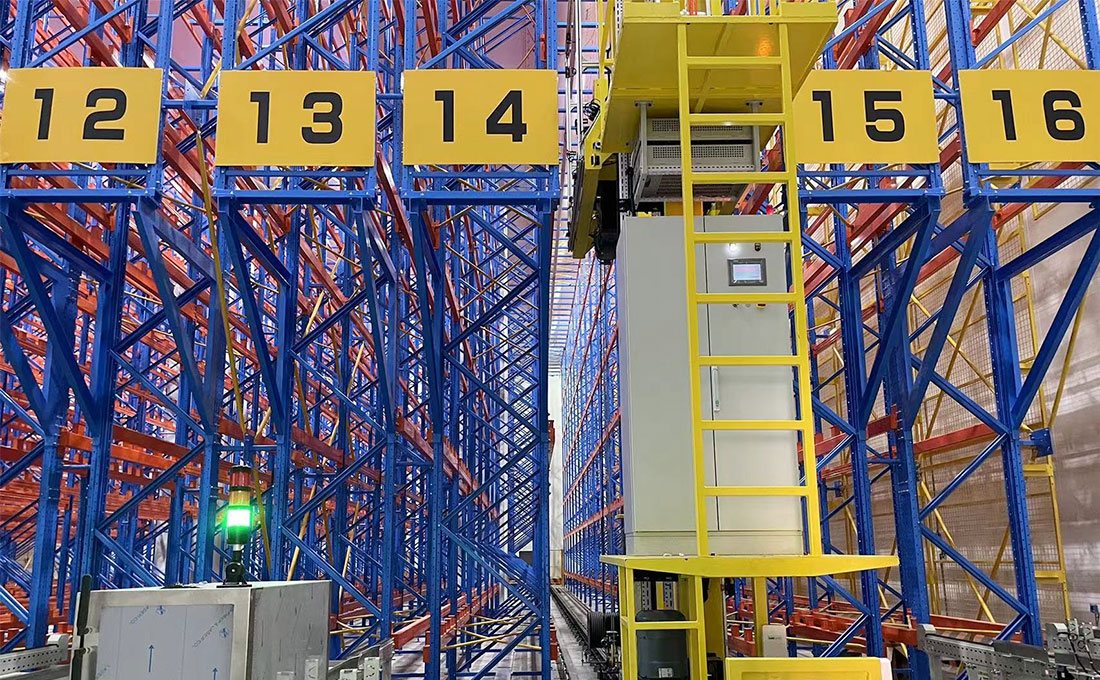
This project represents a convergence of aerospace manufacturing quality standards with IoT-enabled warehouse management — a combination that demands exceptional precision and reliability from every subsystem, including the structural monitoring layer.
Key project data:
- Customer: AVIC Shenyang Civil Aircraft Co., Ltd.
- Location: Shenyang Comprehensive Bonded Zone, Liaoning, China
- Automation partner: Cainiao Network (Alibaba Group) — WCS platform
- Application: Smart warehouse rack structural monitoring
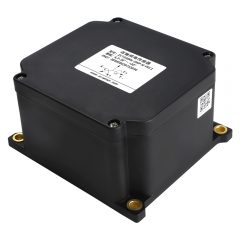
- Sensor: ZCT330M-LWP-ANH-YKC0 NB-IoT wireless tilt sensor
- Monitoring targets: Column deformation, rack tilt, structural integrity
- Project year: 2025
2. The Challenge: Aerospace Warehouse Standards
Aerospace component warehouses operate under fundamentally different constraints than general logistics warehouses:
- Higher asset value: Aircraft parts can range from thousands to millions of dollars per unit. The cost of a single rack failure extends far beyond the damaged goods — it impacts aircraft production schedules and supply chain reliability.
- Tighter tolerances: Many aerospace components require precise storage orientations. Even minor rack deformation can compromise storage alignment, affecting automated retrieval systems and potentially damaging sensitive parts.
- Regulatory traceability: Aerospace manufacturers must maintain documented proof of proper storage conditions for quality audits and regulatory compliance.
- Mixed storage profiles: The warehouse handles a wide range of part types, from small fasteners to large structural assemblies, each with different weight distributions and storage requirements.
3. The Solution: Integrated Smart Warehouse System
Dual-Layer Architecture
The solution integrates two complementary systems:
Layer 1 — Cainiao WCS: The warehouse control system manages automated inbound/outbound workflows, intelligent sorting, and dynamic inventory management. It reduces manual intervention and minimizes operational errors through IoT-enabled tracking and data analytics.
Layer 2 — ZC Sensor rack monitoring: The ZCT330M-LWP-ANH-YKC0 NB-IoT wireless tilt sensors monitor rack structural health in real time, detecting column deformation and tilt that could compromise storage integrity or safety. Data from the sensors is transmitted directly to the cloud platform, providing continuous visibility independent of the WCS layer.
Monitoring Approach
Sensors are mounted at critical structural points on the warehouse racking, focusing on column positions where deformation from uneven loading or floor settlement is most likely to manifest. The system tracks both gradual long-term trends (e.g., settlement-induced tilt) and sudden events (e.g., impact from material handling equipment).
- Real-time column deformation and tilt detection
- NB-IoT cellular communication (no gateway required)
- Cloud-based data platform with historical trend analysis
- Configurable alert thresholds per rack zone
- Independent operation from WCS for fail-safe redundancy
4. Technical Specifications
| Parameter | Specification |
| Product model | ZCT330M-LWP-ANH-YKC0 |
| Measurement type | Dual-axis tilt (column deformation monitoring) |
| Communication | NB-IoT cellular (SIM-based |
| Gateway requirement | None — each sensor connects independently |
| Data platform | Cloud-based with historical trend storage |
| Alert configuration | Per-zone threshold settings |
| Integration | Cainiao WCS platform (independent monitoring layer) |
| Deployment | Column-mount brackets |
| Power | Battery-powered |
| Coverage | Full warehouse rack network |
5. Results & Impact
Dual-layer safety: The independent rack monitoring system provides fail-safe redundancy alongside the WCS. Even if the automation system experiences a fault, structural monitoring continues uninterrupted.
Aerospace-grade traceability: Continuous data logging with configurable granularity supports quality audit requirements. Historical tilt data provides documented proof of proper storage conditions.
Zero downtime deployment: Sensors were installed without disrupting warehouse operations. The wireless NB-IoT communication eliminates wiring work that would otherwise require aisle closures.
Scalable architecture: The same sensor and platform architecture can scale across multiple warehouses or facilities without additional infrastructure investment.
Industry 4.0 alignment: The project demonstrates how IoT structural monitoring integrates with existing automation systems to create a fully digitized warehouse management ecosystem.
6. Key Takeaways for Engineers
- Independent monitoring layers improve overall reliability: In automated warehouses, the rack monitoring system should operate independently from the WCS. If the automation system goes offline, structural safety data should still be accessible.
- Aerospace applications demand higher thresholds: The cost and sensitivity of aerospace components may warrant tighter alert thresholds than general warehousing. Consider zone-based threshold configuration that accounts for stored asset value per rack section.
- Column monitoring detects problems earliest: Rack columns are the primary load-bearing elements. Monitoring column tilt and deformation provides earlier warning than bay-level monitoring alone.
- Documentation value extends beyond safety: Continuous structural monitoring data serves dual purposes: immediate safety alerts and long-term compliance documentation for quality audits and insurance.
7. Frequently Asked Questions
- How does the rack monitoring system integrate with the existing warehouse control system?
The ZC Sensor monitoring platform operates as an independent layer alongside the Cainiao WCS. While the WCS manages inventory movement and automated retrieval, the tilt monitoring system focuses exclusively on structural health. The two systems can share alert data via API integration if cross-triggering (e.g., pausing retrieval in a flagged zone) is desired.
- What makes aerospace warehouse monitoring different from general warehousing?
Aerospace components have higher unit value, tighter storage orientation requirements, and stricter regulatory traceability. Rack deformation that would be acceptable in a general warehouse (e.g., 0.5° tilt on a boxed goods rack) may be unacceptable in an aerospace parts warehouse where precision alignment is critical for automated retrieval.
- Can the sensors handle the metal-rich environment of an aerospace warehouse?
Yes. The NB-IoT cellular communication operates on licensed LTE bands designed for deep indoor penetration. The signal reliably passes through metal rack structures and building infrastructure. Each sensor connects directly to the cellular network, so no local signal routing through metal obstacles is required.
- Is the system compatible with existing aerospace quality management systems?
Yes. The cloud platform supports data export in standard formats for integration with quality management systems (QMS). Historical data logs can be archived per audit requirements, providing documented evidence of proper storage conditions over time.
TAG: